
THE BABYLONIAN DECEIT: Is the Black Nazarene a “Baptized Pagan” God in Disguise?
The streets of Manila were a sea of desperate humanity on January 11, 2026. As the sun rose over the Quiapo District, the 30-hour odyssey of the Black Nazarene reached its climax. Over 8 million devotees—a staggering, record-breaking number—risked life and limb, treading over one another just to graze the rope or touch the dark, weathered skin of the 16th-century image. The world calls it the “Walk of Faith.” But behind the sweat, the tears, and the miraculous healings, a sensational theological investigation is brewing.
Is the Black Nazarene truly the image of Jesus Christ, the Son of God? Or is the Philippines unwittingly bowing down to a shadow from the ancient Tower of Babel? This is an investigative journey into the “Dark History” of the Nazarene—a trail of breadcrumbs leading away from Jerusalem and directly into the heart of Babylonian Paganism.
The Investigation: The Myth of the Burnt Messiah
The common narrative taught in schools is that the Nazarene is black because the ship carrying it from Mexico in 1606 caught fire, charring the image. However, our investigation into the artistic history of the 16th century reveals a different truth. The image was carved from Mesquite wood, a naturally dark timber. The blackness was intentional.
But why a Black God? To find the answer, we must go back 3,000 years before Christ to the land of Shinar, to a man named Nimrod, the great-grandson of Noah.
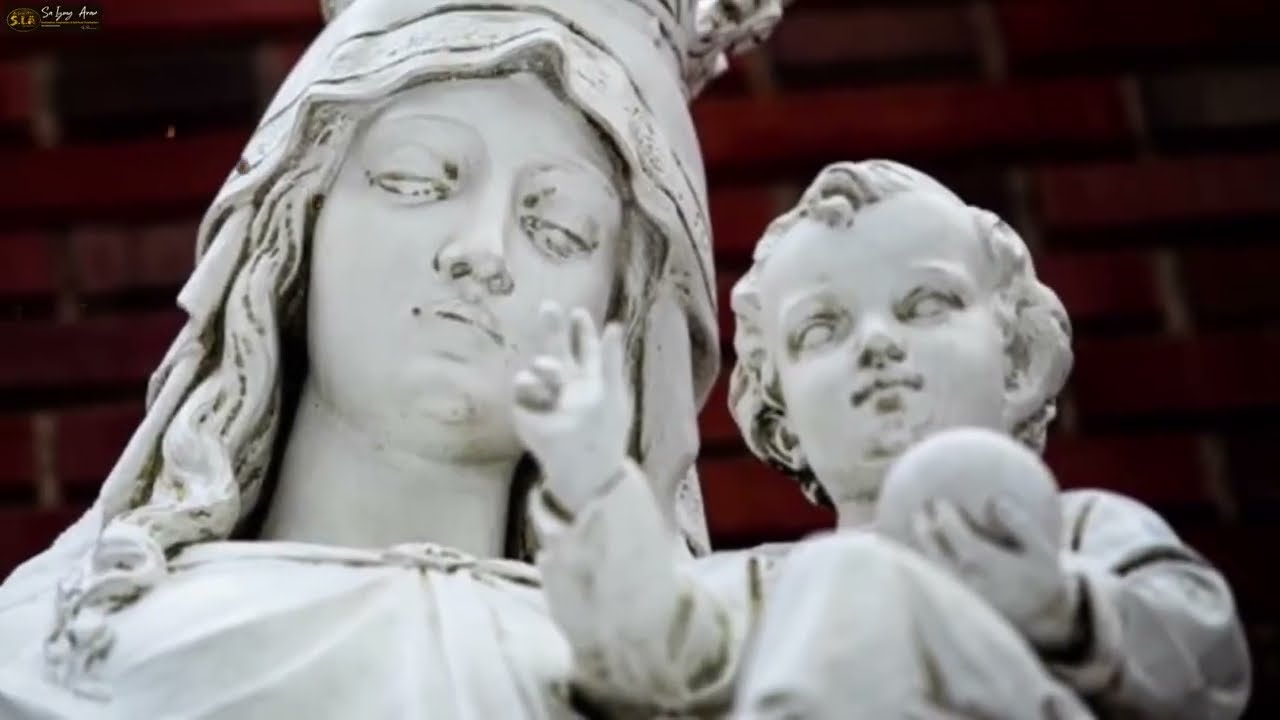
The Sensational Link: History and ancient lore suggest that Nimrod, the builder of the Tower of Babel, was the original “Sun God.” After his death, his wife-mother, Semiramis (also known as Ishtar or Astarte), claimed she was impregnated by Nimrod’s spirit. She gave birth to Tammuz, whom she declared was the reincarnation of the Sun God. This “Mother and Child” duo became the blueprint for every pagan religion that followed.
Constantine’s Compromise: The “Baptized Paganism” of Rome
How did a Babylonian mystery find its way into a 2026 Catholic procession? The trail leads to Emperor Constantine. As a former worshiper of Sol Invictus (the Unconquered Sun), Constantine sought to unite his fractured empire by merging Christian teachings with pagan traditions.
Our investigation cites the chilling words of Cardinal John Henry Newman in his Development of Christian Doctrine: “The use of temples, incense, holy water, processions, and images… are all of pagan origin and sanctified by their adoption into the Church.”
When you look at the head of the Black Nazarene, you see the “Tres Potencias”—the three rays of light emanating from its head. To the untrained eye, they are divine power. To the investigator of ancient symbols, they are the rays of the Sun God, the same halo used to depict Nimrod and Tammuz. In the Roman transition, the Sun God didn’t disappear; he was simply given a new name.
The Scriptural Scandal: The Forgotten Second Commandment
The most intense emotional conflict for a devotee lies in Exodus 20:4-6. The Second Commandment is explicit: “You shall not make for yourself an image in the form of anything in heaven above or on the earth beneath… You shall not bow down to them or worship them.”
The investigation poses a sensational question: If Jesus Christ was a carpenter who followed the Law of His Father perfectly, would He ever have commissioned a statue of Himself to be paraded through the streets? The Bible depicts Jesus as a man who sought the Father in spirit and truth, not through wood and stone.
The Reality of the Image: Psalm 115 mocks the idols of the world: “They have mouths, but cannot speak; eyes, but cannot see; hands, but cannot feel.” * The Mystery of Healing: If the statue has no power, why are millions healed? The investigative conclusion is profound: It is the faith of the person, not the wood of the statue. The Living God responds to the desperate heart, even when that heart is reaching through a medium that He explicitly forbade.
Conclusion: The Truth That Liberates
As the “Walk of Faith” concludes in 2026, the image of the Black Nazarene is locked away behind the high altars of Quiapo. But the mystery remains at large. Are the millions of Filipinos participating in a “Baptized Paganism” created by a Roman Emperor to keep the peace?
The sensational truth is that the Black Nazarene carries the symbols of the Sun God, yet the people who touch it are seeking the Son of God. There is a “Great Controversy” brewing between tradition and scripture. The Living God is a “Jealous God,” not out of spite, but out of a desire for a direct connection with His children—without the need for ropes, wood, or ancient Babylonian imagery.
The Question for 2026: Now that the “Sun God” symbols have been unmasked, will you continue to seek the healing in the wood, or will you look up to the Living Christ who needs no image to hear your prayer?
News

YES! KATHDEN MALAPIT NA MAGSAMA ULIT SA ISANG FASHION SHOW!? NAKAKAIYAK TO ALDEN
“Kath at Alden: Malapit na nga bang magsama sa isang fashion show project? Mga rebelasyong magpapaluha at magpapaisip sa likod…

WOW! ALDEN MAHAL PARIN SI KATH DAHIL SA GINAWA NIYA KAHAPON! KULIT NI TISOY
“Mahal pa rin daw?” — Pagbabalik ni Alden Richards sa Hong Kong, Nagpasiklab ng Intriga at Misteryong Bumabalot sa Ugnayan…

“‘Hindi Ito Simpleng Away Bata!’ — Alfred Vargas, Lumaban sa Bullying: Isang Ama, Isang Laban, at Isang Sistemang Hinahamon”
“‘Hindi Ito Simpleng Away Bata!’ — Alfred Vargas, Lumaban sa Bullying: Isang Ama, Isang Laban, at Isang Sistemang Hinahamon” Isang…

MUKHA ni Kitty Duterte NAGBAGO at PINAGPYESTAHAN sa Social Media
“MUKHA ni Kitty Duterte, NAGBAGO at PINAGPYESTAHAN sa Social Media: Ano ang Totoo sa Likod ng Viral na Usap-usapan?” Isang…

Kapag walang basbas ng USA, hindi bibili sa alok na langis ng Russia. DFA, DOE kinuwesyon sa Senado
“Langis, Lakas, at Pag-aalinlangan: Bakit Nga Ba Tayo Nagdadalawang-Isip?” Sa gitna ng tumitinding krisis sa enerhiya, isang matinding tanong ang…

BASTE MAY PASABOG TUNGKOL KAY PBBM?! ANO TO?!!
PASABOG NA TALUMPATI NI BASTE DUTERTE: BANAT SA KORUPSYON, HAMON SA PAMAHALAAN—SIMULA NA BA NG MAS MALALIM NA POLITIKAL NA…
End of content
No more pages to load