
THE LAST DUET: THE SECRET SPANISH POEM AND THE UNTOLD TRUTH BEHIND THE COCOY LAUREL-NORA AUNOR MYSTIQUE!
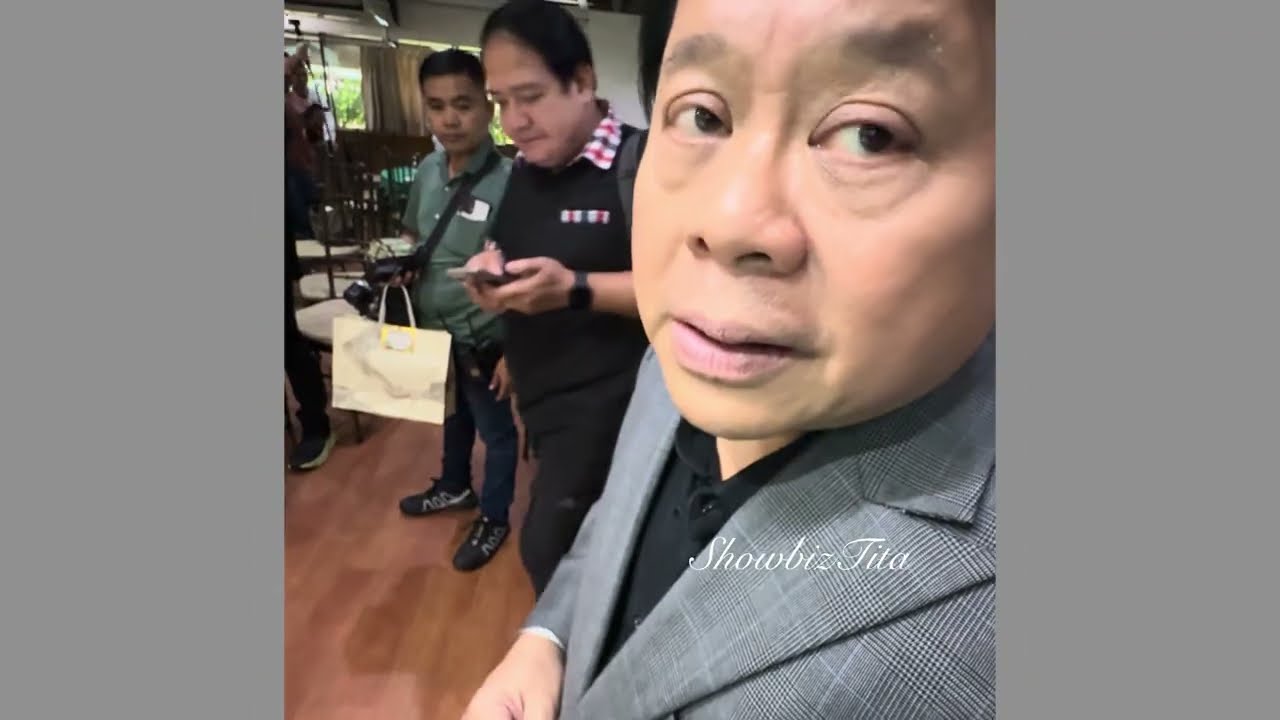
In the quiet, wood-paneled room of the Lakolina, the air still vibrates with the phantom notes of a piano and the haunting echoes of a Spanish ballad. To the world, Cocoy Laurel was the dashing scion of a political dynasty—the velvet-voiced prince of Philippine theater. But behind the curtain of his public persona lies a narrative of profound friendships, unreleased master tapes, and a final, heartbreaking encounter that has remained hidden from the headlines—until now.
This is an investigative journey into the soul of a legend, guided by a confidant who stood in the inner circle of the Laurel family. This is the story of the last time Cocoy Laurel sang, the “lost” concert that defined an era, and the truth about his “special friendship” with the Superstar, Nora Aunor.
The Final January: A Prophetic Spanish Melody
It was January 21, 2025—a date now etched in the annals of a private history. The room was filled with the warmth of a birthday celebration for the mother of a close family friend, an attorney who had walked beside the Laurels since the late 1980s.
In a moment that felt suspended in time, Cocoy Laurel sat at the piano. There was no orchestra, no spotlight, no cheering crowd—just the raw, naked emotion of a man and his music. He beckoned his friend, and together they sang their favorite Spanish song: “Te Quiero, Te Quiero.” > “Te quiero, te quiero / De porqué te estoy queriendo / No me pides la razón…”
But there was a deeper mystery brewing. By June, the attorney felt a sudden, inexplicable “grip” on the soul—a premonition of loss. In a fever of inspiration, he composed a poem in fluent Spanish—a tribute to a “fallen friend.” Why Spanish? Because it was the secret language of their friendship, a linguistic bond that traced back to the heritage of Cocoy’s father, Vice President Salvador “Doy” Laurel. This poem, now a relic of a lost bond, serves as the final literary testament to a man who lived as a poet of the stage.
The Mystery of the “Lost” Araneta Tapes
As we dig deeper into the Laurel archives, we stumble upon a ghost from the 1970s: the legendary Cocoy Laurel Concert at the Araneta Coliseum. It was the peak of “Cocoy-mania,” an era where he sang “Somebody Waiting” and “Someone Who Cares” to thousands of screaming fans.
But where is the evidence? While personal collectors hold onto ancient albums like sacred relics, the master copies of the Filipino cinematic and musical golden age are vanishing.
The Missing Prints: Masterpieces like Lollipops and Roses and its sequel Burong Talangka—the templates for every modern Filipino romcom—are becoming shadows.
The Collector’s Vault: Our investigation reveals that while the industry failed to protect its masters, a secret network of collectors is the only thing standing between these movies and total oblivion.
The attorney, a guardian of these treasures, possesses “hard-to-find” copies that the public hasn’t seen in decades. This raises a sensational question: Is the cultural heritage of the Philippines being held in private basements because the institutions let them rot?
Nora and Cocoy: More Than a Template?
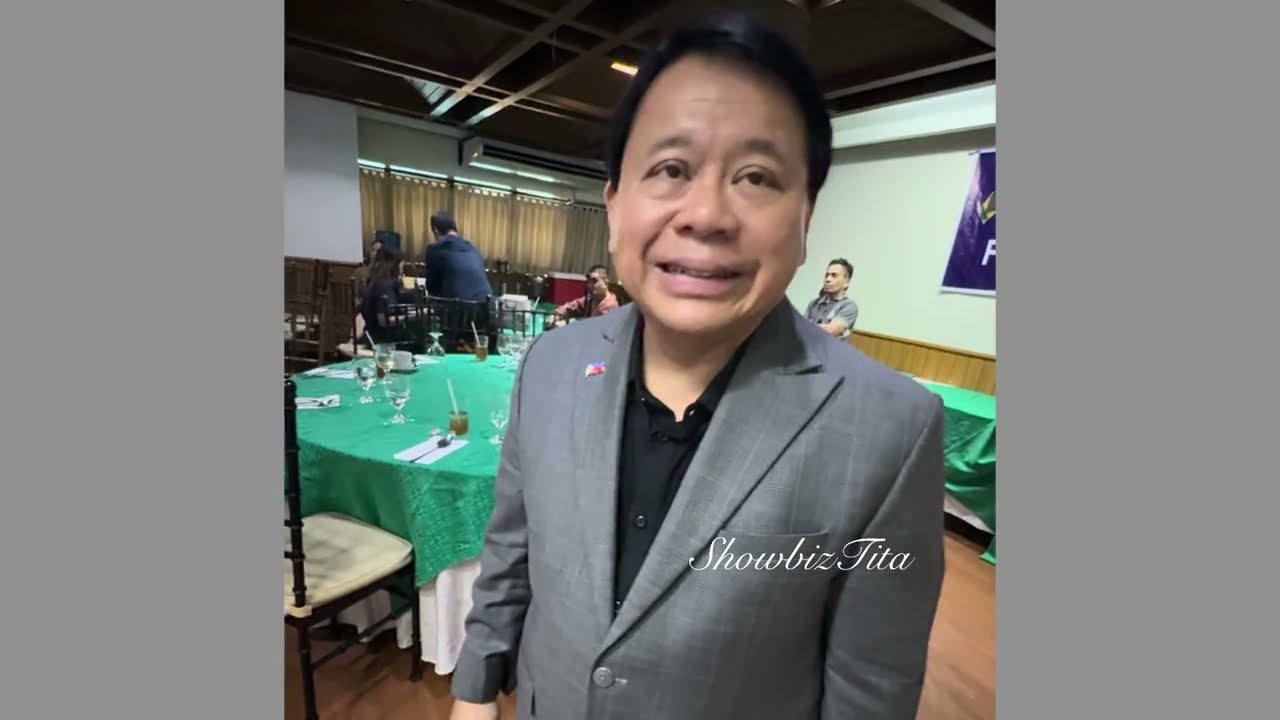
The most enduring mystery of the 70s and 80s is the relationship between Cocoy Laurel and the Superstar, Nora Aunor. They were the “John Lloyd and Bea” of their generation—a pairing so potent that their chemistry on screen in Lollipops and Roses defined the “Light RomCom” genre for fifty years.
But was it just acting?
Those who saw them together in private, like the attorney who watched Nora sit captivated while Cocoy sang at BGC, swear by a “Special Friendship” that transcended the script. “They were both artists,” the source confirms. “They had a bond that was so deep, they followed each other even when the cameras stopped rolling. They were ‘magkasundo’ (in total harmony).” Whether they were “officially” a couple matters less than the sensational reality: they were each other’s muses. Their relationship was a sanctuary of artistic understanding in a world of political and social noise.
The Next Chapter: “Higit sa Lahat”
Even in death, the Laurel legacy continues to demand the spotlight. The investigation has uncovered a new project on the horizon: “A Slice in the Life of Salvador Laurel.” Working under the title Higit sa Lahat, this upcoming project aims to expose the “painful decision” of 1986—the moment Doy Laurel stepped down from his lifelong ambition of the presidency to unite the opposition. It is a story of sacrifice that mirrors the dramatic intensity of his son’s performances. With the Laurel family—including Peter, Nicole Asensio, and Denise—opening their doors, the world is about to see the private agony behind the public power.
Conclusion: The Echoes of a Laurel
Cocoy Laurel was a man of many languages—Tagalog, English, and the Spanish of his ancestors. He was a man who could turn a Tagalog version of “La Vie En Rose” into a national anthem of the heart.
As the sun sets on the Lakolina, the memory of that last duet in January 2025 remains. Cocoy Laurel didn’t just sing songs; he wove a tapestry of connections that bound the highest levels of government to the most humble fans of Philippine cinema.
The mystery of the lost films and the unspoken poems only adds to the legend. Cocoy Laurel has taken his final bow, but the “Somebody Waiting” for his music will never truly be alone as long as his voice echoes in the hearts of those who knew the man behind the music.
News

Nova Villa 80th Birthday Napa-IYAK ng Supresahin at Dumating Kanyang mga KAIBIGAN sa Showbiz! Bản lồng tiếng tự động
NOVA VILLA, 80TH BIRTHDAY CELEBRATION NAGING EMOSYONAL—MGA KAPWA BITUIN SA SHOWBIZ, SORPRESANG DUMATING NA NAGPAIYAK SA LEYENDARYANG KOMEDYANTE Isang gabi…

Baby Clara PINAPAUWI na sa PILIPINAS ng Kanyang Lola Jinkee Pacquiao at Lolo Manny Pacquiao!
BABY CLARA, PINAPAUWI NA SA PILIPINAS NG LALONG MANNY AT LOLANG JINKEE PACQUIAO—ANG LIHIM SA LIKOD NG DESISYONG YUMANIG SA…

Katrina Halili Kris Lawrence NAG AMUYAN sa Live!LANTARAN NA ANG KASWEETAN
KATRINA HALILI AT KRIS LAWRENCE, “NAG-AMUYAN” SA LIVE! LANTARAN NA ANG KASWEETAN NA IKINAGULAT NG MGA NETIZENS Sa gitna ng…

SA WAKAS NAGSALITA NA! PIOLO PASCUAL may nilinaw tungkol sa kanila ng rumored GF na si KIM RIVERA
PAPA P AT KIM RIVERA: ANG LIHIM NA BAKASYON, VIRAL NA LARAWAN, AT ANG MULING PAGLAGABLAB NG SPEKULASYON SA LIKOD…

SA WAKAS! KATHRYN BERNARDO at MAYOR MARK ALCALA tinuldukan na ang balitang RELASYON at PAGPAPAKASAL
PAGITAN NG CHISMIS AT KATOTOHANAN: ANG LIHIM SA UMANOY KASAL NI KATHERINE BERNARDO AT MAYOR MARK ALKALA NA YUMANIG SA…

Bakit istrikto si Rep. Jinky Luistro sa Sara Duterte impeachment hearing
“PROBING QUESTIONS VS CLARIFICATORY QUESTIONS: ANG NAKATAGONG LABAN SA IMPEACHMENT HEARING, SUPREME COURT RULING, AT ANG PAHINGING KAMAY NG KAMARA…
End of content
No more pages to load