THE AIRPORT TAKEDOWN: A General in Handcuffs and the Shadow of Sedition

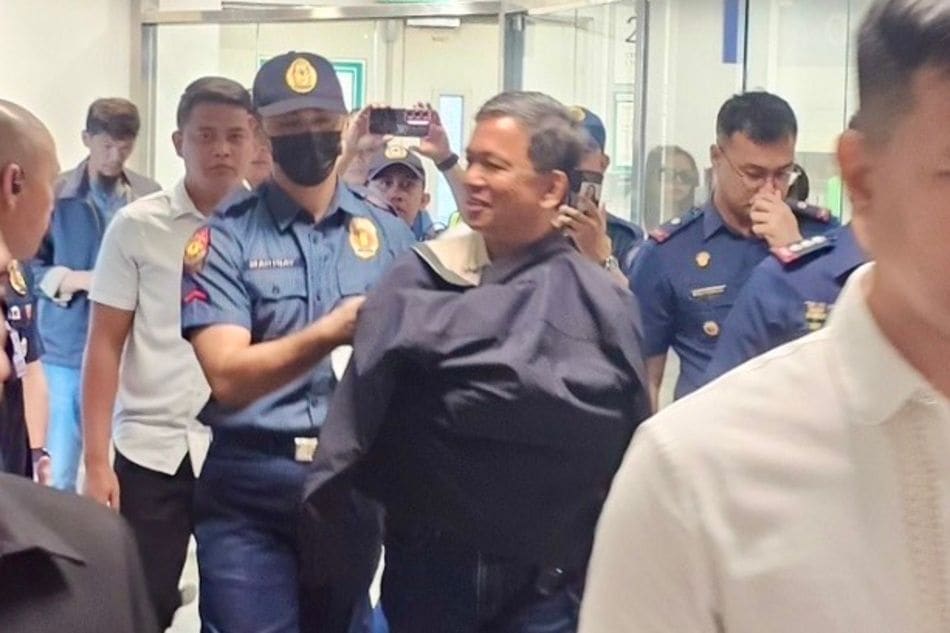
The transition into the first week of January 2026 was meant to be a period of national reflection, but for the Philippine political landscape, it has become a theater of high-stakes drama and constitutional tension. On Monday, January 5, 2026, the arrivals gate at the Ninoy Aquino International Airport (NAIA) Terminal 3 became the stage for a cinematic arrest that has sent shockwaves through the military and civilian sectors alike.
Retired Philippine Air Force Major General Romeo Poquiz, a man who once commanded the skies, found himself grounded by the very law he once swore to protect. Arrested on charges of Inciting to Sedition, Poquiz’s return from Bangkok, Thailand, was met not with a welcoming committee, but with a tactical team from the Philippine National Police (PNP).
THE AMBUSH AT TERMINAL 3: The Investigation Deepens
The arrest was not a random act of law enforcement; it was the culmination of a month-long surveillance operation. As Poquiz stepped off the aircraft, he was immediately intercepted based on a standing warrant issued by the Quezon City Regional Trial Court Branch 77 on December 5, 2025.
The roots of this case go back to the volatile Anti-Corruption Rallies of November 2025. During the height of the “First Trillion Peso March” unrest, Poquiz allegedly made a series of inflammatory calls for the Armed Forces to “rise up” and withdraw support from the administration. While Poquiz framed these calls as a patriotic stand against systemic corruption, the State viewed them through a much darker lens: an attempt to dismantle democratic order.
PNP Acting Chief Lt. Gen. Jose Melencio Nartatez Jr. was firm during the Camp Crame press briefing.
“This was a result of the work of the prosecution service. The court found probable cause. There is nothing personal here; it is about the law,” Nartatez stated, dismissing claims that the arrest was a political “hit job.”
THE DEFENSE’S OUTRAGE: A “Kidnapping” or a Booking?
The drama intensified as Poquiz’s legal counsel, the high-profile and fiery Ferdinand Topacio, alongside Retired General Virgilio Garcia, leveled explosive accusations against the arresting officers. According to Topacio, the police did not just implement a warrant; they orchestrated a “forced disappearance” within the airport walls.
“We repeatedly demanded to confer with our client at the airport, but we were ignored,” Topacio told reporters, his voice echoing through the halls of Camp Crame. “He was suddenly rushed here. We will hold those responsible accountable for this blatant violation of rights.”
The legal team’s strategy is clear: shift the narrative from Sedition to Human Rights Violations. By focusing on the “aggressive” nature of the airport transport, the defense hopes to cast Poquiz as a political martyr—a decorated general being bullied by a “paranoid” state apparatus.
THE MILITARY’S STANCE: “No One is Above the Law”
Perhaps the most chilling aspect of this investigation is the reaction of the Armed Forces of the Philippines (AFP). In a move that signals a deep rift between the old guard and the current professionalized corps, the AFP issued a formal statement supporting the arrest.
The military’s message was surgical:
The Warrant is Supreme: The AFP emphasized that Poquiz was arrested by a civilian court, reinforcing the principle of civilian supremacy over the military.
The Limits of Speech: While the AFP respects freedom of expression, they made it clear that inciting rebellion is a line that cannot be crossed, regardless of one’s former rank or medals.
The Fight Against Corruption: The AFP acknowledged the “pursuit of good governance” but warned that extra-legal actions—such as calling for a military uprising—undermine the very democracy they seek to save.
THE MYSTERY OF THE “TRILLION PESO MARCH”
As Poquiz undergoes booking procedures, investigators from the Criminal Investigation and Detection Group (CIDG) are looking into a broader conspiracy. Was Poquiz acting alone, or was he the “voice” for a larger, clandestine group of high-profile personalities involved in the violent September 21 riots in Manila?
The PHP 48,000 bail recommended for his temporary liberty seems small compared to the weight of the charges. However, the true “price” of this case is the stability of the Philippine government. If Poquiz is found guilty, it sets a precedent that retired generals cannot use their influence to sway the active-duty ranks. If he is acquitted, it could embolden a new wave of military interventionism.
THE VERDICT OF THE STREETS
Outside Camp Crame, the public sentiment is split. To the protesters of the Trillion Peso March, Poquiz is a hero who dared to speak the truth. To the government and the active military, he is a dangerous “seditionist” whose rhetoric could have sparked a civil war.
As Poquiz prepares to face the court, the nation remains on edge. The “Airport Takedown” of January 5 is just the opening chapter of a legal battle that will define the limits of dissent and the strength of the rule of law in 2026.
The General has landed. But for Romeo Poquiz, the real turbulence is just beginning.
News

Imee Marcos binanatan si Sharon Garin sa 2-Day work ng DOE!
“2 Araw Lang Ba ang Gobyerno? Ang Lihim na Tensyon sa DOE sa Gitna ng Krisis sa Presyo ng Langis”…
Garin at Abad GINISA ni Marcoleta sa pag-angkat ng mas mahal na petrolyo!
“PHP 61 Kada Litro: Ang Misteryo sa Likod ng Biglaang Pagtaas ng Presyo ng Gasolina sa Pilipinas” Isang matinding pagdinig…

LAGOT! Zaldy Co Hindi Na Nakapagtimpi!
“ZALDI KO VS. VP SARA DUTERTE: MGA AKUSASYON, KATAHIMIKAN NG MGA GRUPO, AT ANG UMUUGONG NA POLITIKAL NA BAGYONG HINDI…

PBBM AT LIZA HULI SA AKTO! KALAT NA KALAT NA NGAYON!
“VIRAL VIDEO NG ‘DINNER DATE’ NINA PBBM AT FIRST LADY, NAGPAALAB NG USAP-USAPAN: SIMPLICITY O MAY MAS MALALIM NA MENSAHE?”…

ETO NA! SI BASTE DUTERTE NA ANG TATAKBONG PRESIDENTE SA 2028?
“BASTE DUTERTE SA 2028: SIMULA NA NGA BA NG BAGONG PRESIDENTIAL RUN O EPEKTO LANG NG POLITIKAL NA ALON?” Sa…

AYAN NA! PWERSA NG MGA DUTERTE LUMABAS NA!
“RAGE COALITION UMUGONG SA POLITIKANG PILIPINAS: BAGONG SANIB-PUWERSA NG MGA TAGASUPORTA NG DUTERTE, MAY MAS MALALIM PA BANG HINAHANDA?” Sa…
End of content
No more pages to load