
THE AIRPORT ASSASSINATION: The Truth Behind Vice Ganda’s “Attitude Scandal”
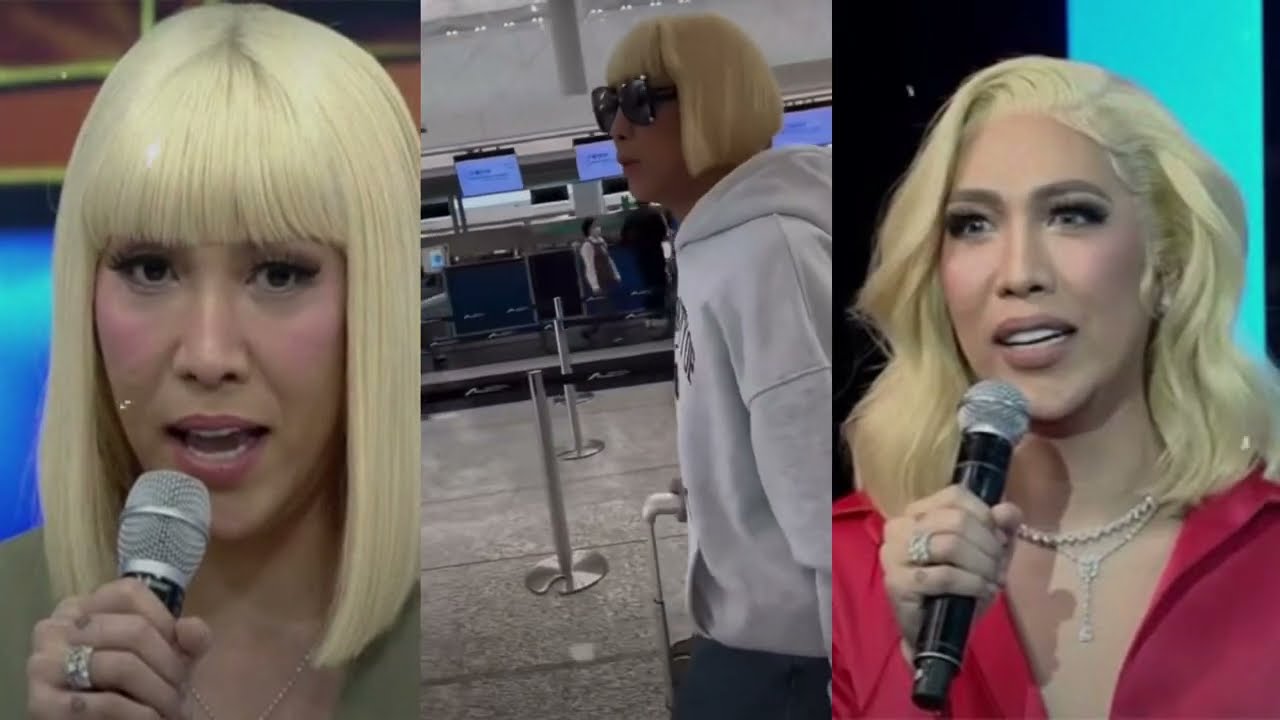
In the hyper-saturated world of digital media, a single second of footage can be weaponized to destroy a legacy built over decades. The latest victim in this high-stakes game of “cancel culture” is none other than the “Unkabogable Star,” Vice Ganda. In the closing days of 2025 and the dawn of 2026, the Philippines stood still as a viral video from an airport terminal threatened to unmask the nation’s most beloved comedian as a cold, “isnabera” diva.
The headline was designed to bleed: VICE GANDA UNMASKED: The Airport Snub That Set Social Media Ablaze. But as we peel back the layers of this digital mystery, we find a story of manipulated reality, psychological triggers, and the terrifying power of the “Edit” button.
The Incident: A Collision in the Terminal
It began with a shaky mobile phone camera in the crowded terminal of an international airport. The video, which clocked in at a mere twenty seconds, showed a fan approaching Vice Ganda. In the footage that first ignited the web, the aura around Vice seemed to shift from vibrant to icy. The fan, seemingly flustered, struggled to remember Vice’s name.
Then came the “Explosion.” The video cut to Vice Ganda allegedly raising her voice, her face contorted in what appeared to be genuine irritation. The narrative supplied by anonymous uploaders was swift: Vice was insulted that the fan didn’t know her name. She was accused of “Attitude Issues,” “Divaness,” and a “God Complex.”
Within hours, the comment sections became a battlefield. “The fame has gone to her head,” one top comment read. “She forgot where she came from,” another lamented. The public was ready for a public apology—or a public execution.
The Investigation: Anatomy of an “Edit”
But in the world of Showbiz Life, things are rarely as they seem. Our investigative team sat down to analyze the raw, unedited footage that surfaced shortly after the initial firestorm. What we discovered was a masterpiece of digital deception.
The “insult” that netizens claimed to see was, in fact, a comedic bit that the fan was in on. In the extended cut of the video, the context changes entirely. The fan jokingly pretended not to recognize Vice as part of a skit they were filming together for the fan’s own vlog.
Vice’s “outraged” response? It was a punchline.
“Happy New Year po! Hindi niyo nga po ako kilala, ate!” Vice shouted this with a wide grin, followed by a roar of laughter from both the star and the fan. The “scandalous” voice-raising was nothing more than the Unkabogable humor that has filled stadiums for years. The viral video had been surgically sliced to remove the laughter, leaving only the “anger” behind.
The Psychological Trigger: Why We Believed the Lie
Why was the public so quick to believe that Vice Ganda had turned into a monster? The answer lies in the “Celebrity Trap.” We live in an era where we wait for icons to fall. We are fascinated by the idea of the “humble star” turning into the “arrogant diva.”
The “isnabera” narrative worked because it played on the public’s insecurity. By framing Vice as someone who was offended by a lack of recognition, the creators of the fake video tapped into a universal fear of being looked down upon by the powerful. It wasn’t about Vice; it was about the audience’s projection of their own vulnerabilities.
The Response: Vice Breaks the Silence
When Vice Ganda finally addressed the issue, she didn’t come with a scripted PR apology. She came with the truth. She clarified that the interaction was lighthearted and that the “context” was stolen.
The fan involved in the incident also came forward, visibly distraught that her idol was being bashed because of a joke they shared. “There is no ill will,” the fan stated in a follow-up video. “It was a misunderstanding caused by people who want views.”
This revelation turned the tide of the issue. The bashers, once loud and aggressive, retreated into the shadows. The conversation shifted from Vice’s “attitude” to the “Attitude Issue” of the Internet itself. —
The Verdict: The Viral Mirage
The “Airport Snub” of 2026 will go down in history as a textbook example of a Viral Mirage. It proves that in the age of 5G and instant uploads, the truth is often the last passenger to board.
Vice Ganda remains unkabogable, but the scars of the incident remain as a reminder: Not everything you see is the whole picture. A single edit can turn a “Happy New Year” wish into a career-ending insult.
The mystery of the “snub” is solved. There was no diva, no insult, and no anger. There was only a comedian doing what she does best—engaging with her public—and a digital predator looking for clicks.
As we move forward into this new year of showbiz trends, the lesson is clear: Before you join the mob, ask yourself—who is holding the scissors that cut the video?
News

Mga Aktres na Pumanaw sa Edad na Halos 100 Years old!
Mga Alamat ng Pelikulang Pilipino na Pumanaw sa Katandaan: Nakakaiyak na Kuwento ng mga Aktres na Minsang Naghari sa Silver…

Tunay Na Rason Bakit Iniwan Sila Ng Unang Asawa!
Tunay Na Rason Bakit Iniwan Sila Ng Unang Asawa! Milyon-milyong mga Pilipino ang tumututok araw-araw sa buhay ng mga sikat…
“It Takes Two” Legend Pumanaw: Mundo ng Hip-Hop Nagluksa sa Biglaang Pagkawala ni Rob Base
“It Takes Two” Legend Pumanaw: Mundo ng Hip-Hop Nagluksa sa Biglaang Pagkawala ni Rob Base Nagluksa ang mundo ng musika…
CONGRATULATIONS, ANGELIQUE AND DAVID!
“A Preview of the Best Day of Our Lives” — Angelique Manto at David Guison, Pinaiyak ang Netizens sa Kanilang…

VIDEO ni Alex Gonzaga SUMASAYAW habang BUNTIS ipinakita ni Toni Fowler!!
“Akala Mo Ako Yung Ama!” — Toni Fowler, Emosyonal sa Viral Video ni Alex Gonzaga Habang Ipinapakita ang Baby Bump…

KATRINA BINISITA SI KRIS SA BAHAY DAHIL MAY SAKIT
“Parang Bumilis Recovery Ko…” — Kris Lawrence, Kinilig ang Fans Matapos Alagaan ni Katrina Halili Habang May Sakit! Mga Sweet…
End of content
No more pages to load